
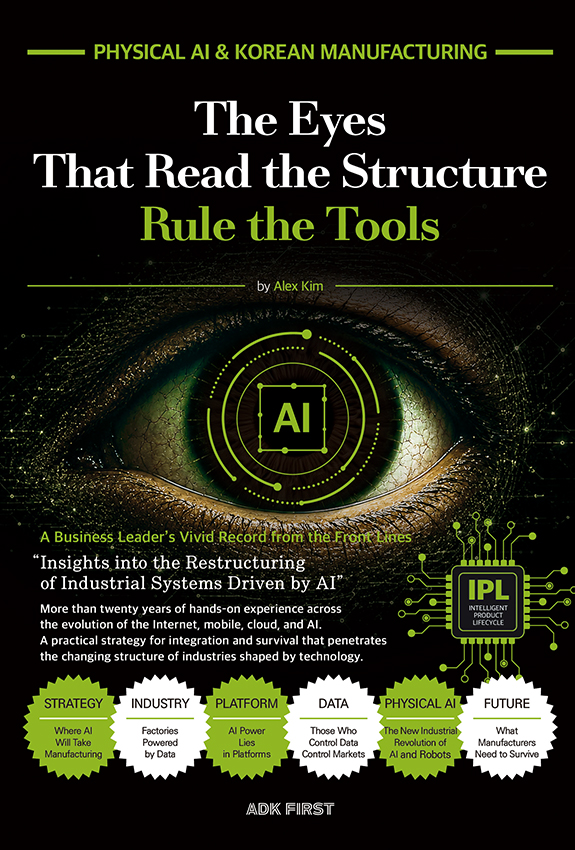
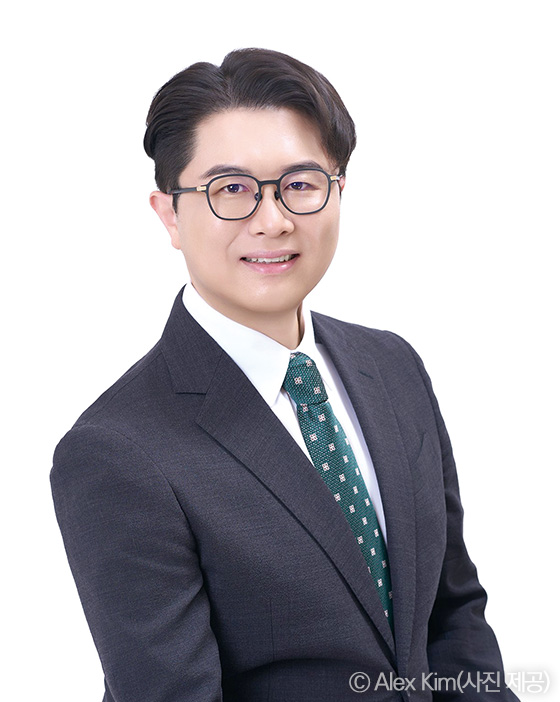
The author is an entrepreneur who has personally experienced, from the very ground level of industry, how the Internet and mobile technologies have transformed the world over the past two decades since the early 2000s.
In the coming era, it will not be those who merely use tools,
but those who understand the underlying structure, who will lead.
“This book will become the eyes through which you learn to read that structure.”
Since the early 2000s, when the Internet first began reshaping industries, the author has worked on the front lines, experiencing those transformations firsthand. From the early days of Internet infrastructure and enterprise IT environments, through the mobile era, and into today’s AI revolution, the author has closely witnessed how technology changes the world and the structure of industries.
Working alongside global IT companies such as SAP, Autodesk, and Cloudflare, the author experienced firsthand, on the front lines, how technology transforms the structure of industries and enterprises.
Rising to the position of Korea GM for a global multinational company, the author gained deep insight into the fundamental nature of technological, business, organizational, and industrial transformation.
This book is a record born from pouring more than two decades of experience and insight into the great turning point of the AI era.
This book is not merely a work of future predictions or theory. It contains practical insights and survival strategies gained through real-world experience — through challenges faced, failures endured, and lessons validated on the front lines of industry.
In particular, the book explores the sweeping restructuring of industries driven by AI — including AI agents, digital transformation, GPU infrastructure, manufacturing innovation, smart factories, mobility, energy, platforms, data, and robotics — and presents the most practical perspective on the choices that Korea, businesses, and individuals must make in response.
This book is not intended solely for the IT industry. It is for entrepreneurs, business leaders, policymakers, students, investors, and anyone who wants to truly understand how the world of the future will move and evolve.
Endorsement 1
Endorsement 2
Prologue
Introduction
Chapter 0 The Long History of AI
0.1 Why Begin with History
0.2 1956 — A Summer Workshop
0.3 1974–1980 — The First AI Winter
0.4 1997 — Deep Blue Ends Chess
0.5 2012 — AlexNet and the Deep Learning Explosion
0.6 2017 — “Attention Is All You Need”
0.7 November 30, 2022 — ChatGPT
0.8 January 2025 — The DeepSeek Shock
0.9 March 2026 — The Declaration of Physical AI
Part Ⅰ The Birth of Power
The NVIDIA Empire and the Capture of AI Infrastructure
Part Ⅰ Opening
Chapter 1 The Day AI Was Reborn
1.1 The Decisive Difference Between “Responding AI” and “Thinking AI”
1.2 o1 — The Stone OpenAI Threw
1.3 The DeepSeek Shock — January 2025, the Day the World Trembled
1.4 What DeepSeek Proved and What the World Misunderstood
1.5 How Reasoning Models Are Changing the Rules of the Game
1.6 The Warring States Era of Models
Chapter 2 The Limits of Scaling
2.1 The Scaling Law — A Faith That Ruled AI for Ten Years
2.2 Cracks Begin to Show
2.3 DeepSeek Proves the Value of Efficiency
2.4 Test-Time Compute — A New Dimension of Scaling
2.5 New Bottlenecks — Data and Algorithms
2.6 Opportunities Opening for Korean Companies
Chapter 3 The NVIDIA Empire
3.1 What It Means for One Company to Become the OS of the Global AI Market
3.2 CUDA — A Moat Built Over 20 Years
3.3 Selling Not a GPU, but a “System”
3.4 Capturing Networking — The Lesson of the Mellanox Acquisition
3.5 Jensen Huang’s GTC — The Blueprint of Industry Order
3.6 Why Have Challengers Failed Repeatedly?
Chapter 3.5 The Chip War and Geopolitics
3.5.1 Why Chips Are the Oil of the 21st Century
3.5.2 America’s Strategy — “Stay Two Generations Ahead”
3.5.3 China’s Counterstrike — Self-Sufficiency and the Path Around
3.5.4 Taiwan — The Global Economy on a Single Island
3.5.5 ASML in the Netherlands — One Company Holding the Future of AI
3.5.6 Korea’s Position — Memory Emperor and Beyond
3.5.7 Korea’s Strategy — Triangular Diplomacy and Internal Strengthening
3.5.8 Implications for Korean Manufacturing
Chapter 4 Full Stack AI
4.1 What Is “Full Stack”?
4.2 Big Tech’s Proprietary-Chip Wars
4.3 “If You Are Not Full Stack, You Are Dependent”
4.4 Full Stack at the National Level — Sovereign AI
4.5 Korea’s Assets and Gaps
4.6 Korea’s Choice — Which Stack to Build?
Chapter 5 AI Factory
5.1 Not a Data Center, But a Factory
5.2 An Industrial Revolution Repeated — A New Meaning of “Factory”
5.3 Power, Cooling, Real Estate — The New Resource War
5.4 AI Factory Competition at the National Level
5.5 Korea’s AI Factory Reality
5.6 Connecting the AI Factory to Industrial AI
Part Ⅰ References and Sources
Part Ⅱ The Reordering
AI Agents, NeoCloud, GPU Economics, and the Open-Source Insurgency
Part Ⅱ Opening
Chapter 6 AI Agents
6.1 The Era of the Chatbot Is Over
6.2 Claude Code, Cursor, Devin — A Revolution That Began in Coding
6.3 MCP — The Standard Language of Agents
6.4 OpenAI vs. Anthropic — The Choice of the Enterprise
6.5 The Real Barrier for Agents — Integration and Governance
6.6 Tectonic Shift in Pricing Models — The Economics of Tokens
Chapter 7 NeoCloud
7.1 Is the Hyperscaler Era Ending?
7.2 The Birth of CoreWeave — A New Jersey Garage to a $43B Empire
7.3 NVIDIA’s Blessing — The Beginning of a “Strategic Alliance”
7.4 Explosive Growth — CoreWeave by the Numbers
7.5 The Birth of Nebius — From Russia to Europe
7.6 Nebius’s Rapid Rise — Resurrection in Eighteen Months
7.7 Why They Cannot Fail — The Five-Layered Moat
7.8 Risk Factors — Not All Moats Are Safe
7.9 2026–2030 Outlook — The Next Five Years for NeoCloud
7.10 Korea’s NeoCloud Strategy
Chapter 8 GPU Economics
8.1 What “Don’t Buy a GPU, Rent It” Really Means
8.2 The H100 Price Rollercoaster
8.3 The 2026 Rebound — Demand Beat Expectations
8.4 New Players Born of GPU Economics
8.5 GPU Prices Decide the AI Business Model
8.6 Jevons’s Paradox — Why Demand Rises Even as Efficiency Improves
8.7 Korea’s GPU Strategy — Not as User but as Supplier
Chapter 9 The Open-Source AI Revolt
9.1 The End of the Belief That “Open Source Cannot Win”
9.2 Llama — Meta’s Big Bet
9.3 China’s Open-Source Offensive — DeepSeek, Qwen, Kimi, GLM
9.4 Even OpenAI Returned to Open — The Shock of gpt-oss
9.5 How Open Source Is Reshaping Enterprise AI Strategy
9.6 Where Does Korea Stand?
9.7 The Bright and Dark Sides of Open Source — Security and Responsibility
Part Ⅱ References and Sources
Part Ⅲ The Transformation
The Age of Physical AI Swallowing the Material World
Part Ⅲ Opening
Chapter 10 The Declaration of Physical AI
10.1 The One Sentence Jensen Huang Changed Everything With
10.2 The Four Waves of AI
10.3 Why “Now” for Physical AI
10.4 The Decisive Moment of GTC 2026 — Five Names
10.5 What Physical AI Changes
10.6 Korea’s Distinctive Position in Physical AI
Chapter 11 The Digital Twin
11.1 Not “Simulation” but “Twin”
11.2 The Six Layers of the Digital Twin
11.3 NVIDIA Omniverse — The Platform of the Digital Twin
11.4 Real-World Cases — BMW, Foxconn, Mercedes-Benz
11.5 Korea’s Digital Twin Reality
11.6 How the Digital Twin Changes the Way Work Is Done
Chapter 12 The Reality of Manufacturing AI
12.1 Manufacturing AI: Hype vs. Reality
12.2 The Four Data Problems on the Manufacturing Floor
12.3 “Don’t Start with AI” — A Counterintuitive Lesson
12.4 What AI Actually Does in Manufacturing
12.5 Korea’s Manufacturing AI Adoption
12.6 Korea’s Structural Opportunity in Manufacturing AI
Chapter 13 PTC IPL
13.1 Why PTC, and Why IPL
13.2 The Concept of the Intelligent Product Lifecycle
13.3 The Six Pillars of IPL
13.4 The Alliance with NVIDIA — Why It Matters
13.5 Korean Manufacturing Meets IPL
13.6 “The Brain of Korean Manufacturing” — What IPL Means Locally
13.7 A Personal Confession — Why I Came to PTC
13.8 The Future IPL Draws — In Place of a Conclusion
Chapter 14 Humanoid Robots
14.1 Eleven Months at the BMW Plant — The Moment of Proof
14.2 Figure, Tesla, Boston Dynamics — The U.S. Big Three
14.3 The Chinese Surge — Unitree, AGIBOT, UBTECH
14.4 The Dramatic Cost Decline
14.5 The Real Bottleneck — AI, Not Hardware
14.6 Korea’s Position in the Humanoid Race
Chapter 15 Autonomous Driving
15.1 2026 Is the Inflection Point for Autonomous Driving
15.2 Waymo — The Quiet Winner
15.3 Tesla — Late but Fast
15.4 The Truth About the Safety Gap
15.5 China’s Pursuit — Huawei, Baidu, XPENG
15.6 Korea’s Autonomous Driving — Opportunities and Limits
Chapter 16 The AGI Debate
16.1 The Word “AGI”
16.2 Expert Timelines — A Polarized Field
16.3 Progress Since the Reasoning Models
16.4 The Change Before AGI — “Silent AGI”
16.5 The AGI Risk and Safety Debate
16.6 Korea’s AGI Strategy — A Pragmatic Response
Chapter 17 The Reordering of Jobs
17.1 The Most Important Question in This Book
17.2 What “AI Takes Jobs” Actually Means
17.3 Goldman Sachs’ 300-Million Forecast
17.4 The Shape of Disappearing Jobs
17.5 The Shape of Emerging Jobs
17.6 Korea’s Particular Conditions
17.7 The Hidden Risk — Youth and Mid-Career Collide
17.8 What Only People Can Do
17.9 Designing the Transition — What Korea Must Do
Chapter 18 The Other Side of AI
18.1 A Counterargument to This Whole Book
18.2 Counterargument 1 — “LLMs Cannot Reason”
18.3 Counterargument 2 — “Hallucination Is a Fundamental Problem”
18.4 Counterargument 3 — “The AI Bubble Is Real”
18.5 Counterargument 4 — “Energy and Water Will Cap AI Growth”
18.6 Counterargument 5 — “Technology Does Not Automatically Produce Prosperity”
18.7 Counterargument 6 — “Real-World AI Deployment Failures Are Many”
18.8 Why I Still Hold the Korean Manufacturing AI Line
Chapter 19 To You Who Are Reading
19.1 Not the Country, Not the Company — You
19.2 To Executives — Investment and Organizational Redesign
19.3 To Middle Managers — The Front Line of Team Transformation
19.4 To Individual Contributors — Skill Reorganization Begins Now
19.5 To Parents and Educators — Preparing the Ne xt Generation
19.6 Seven Common Principles for All Readers
19.7 Returning to My Story
Part Ⅲ References and Sources
Conclusion
Epilogue
Appendix | A SHORT NOVEL 「Fif teen Years」(Min-jae's Record, 2025-2040)
 070-4651-3730
 ksbookup@naver.com
 지식과감성# 카카오플러스 친구 추가